Twenty minutes
The first call came in twenty minutes after the ads went live.
Two hours later he had booked the job, driven out, done the work and been paid. That is still my personal record.
The challenge
PestMax was a new pest control business in Birmingham, run by one person. He had the skills and the van. What he did not have was a steady flow of enquiries.
An SEO agency was already working on the account. Every month we compared the two channels on traffic volume, traffic quality, lead quality and revenue. Google Ads came out ahead on all four, every month.
The other problem was seasonality. Summer brings wasps, ants and flies. Winter is quiet. Most pest control firms struggle to stay booked all year.
The approach
Campaigns targeted emergency pest control searches, close to home. Someone looking for a wasp nest removed today is a very different buyer from someone browsing.
Tracking went in at the same time, through WhatConverts, covering both phone calls and form submissions. That is what makes the numbers below possible. Without it there is no way to say which keywords produced work rather than enquiries.
The insight. Emergency pest control terms are expensive and competitive. We went after specific problems: wasp removal, rat control. Everyone else bids on the generic terms. Cheaper clicks, better fit.
As summer ended, budget moved towards work that holds up in the colder months. Rodent control peaks in autumn and winter. Commercial contracts and preventative treatments do not follow the same seasonal curve as emergency callouts.
What it produced
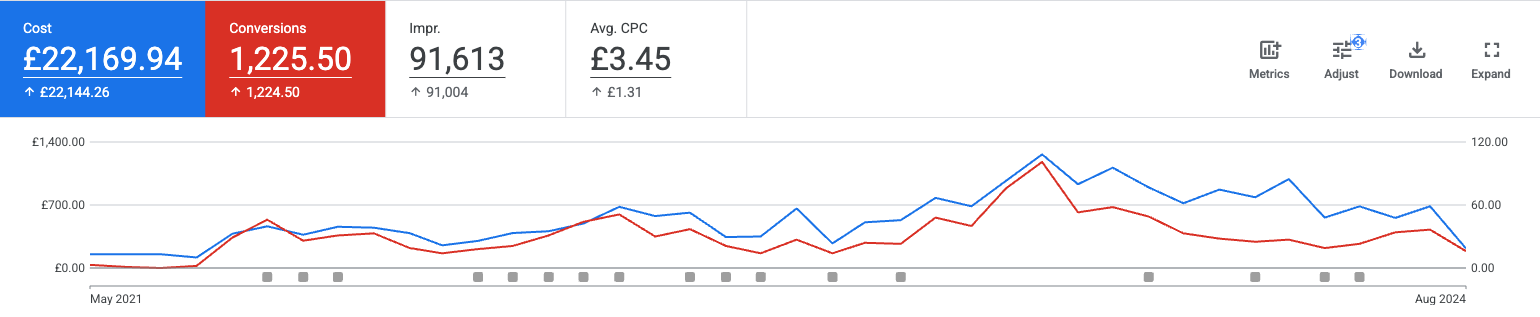
Over three and a half years, cost per lead came down by 40%.
The quality numbers matter more. 90% of the leads were qualified. Real enquiries, from people in the service area, who wanted the work done. 85% of phone calls turned into paid work. Form enquiries converted at 50%.
Those last two are the figures worth borrowing. A lead is only worth what it becomes. Calls closed at nearly twice the rate of forms. That is worth knowing when you decide where the budget goes.
On revenue, plainly
Google Ads tracked around £45,000 of revenue in the first year. The business was still one person.
That figure only counts what came through the ads and through the tracking. It does not include repeat customers, referrals, or anything else the business earned. The real total was higher. I have no way to prove by how much, so I am not going to guess.
If you run a seasonal service business
Track calls, not just forms. In this account calls closed at 85% and forms at 50%. Counting them as one number would have hidden that completely.
Plan for the off-season before it arrives. Move budget towards rodent work, commercial contracts and preventative treatments. That keeps the calendar full when callouts dry up.
Go specific before you go broad. Wasp removal and rat control cost less per click than “pest control”. Those searchers already know what they need.
Speed decides who wins. The twenty minute call became paid work that afternoon. The phone was answered and someone drove out. The ads only deliver the lead.